Cooking the Same Recipe I Made the Week I Got This Tattoo
ADVERTISEMENT I didn’t plan to make this dish again, not consciously, at least, which is usually how the most meaningful repetitions happen in my life, slipping back in quietly before I realize why they feel necessary. ADVERTISEMENT I opened the fridge, saw the ingredients lined up in a way that felt familiar rather than accidental,…
I didn’t plan to make this dish again, not consciously, at least, which is usually how the most meaningful repetitions happen in my life, slipping back in quietly before I realize why they feel necessary.
I opened the fridge, saw the ingredients lined up in a way that felt familiar rather than accidental, and suddenly I was standing in the same emotional space I’d occupied months ago.
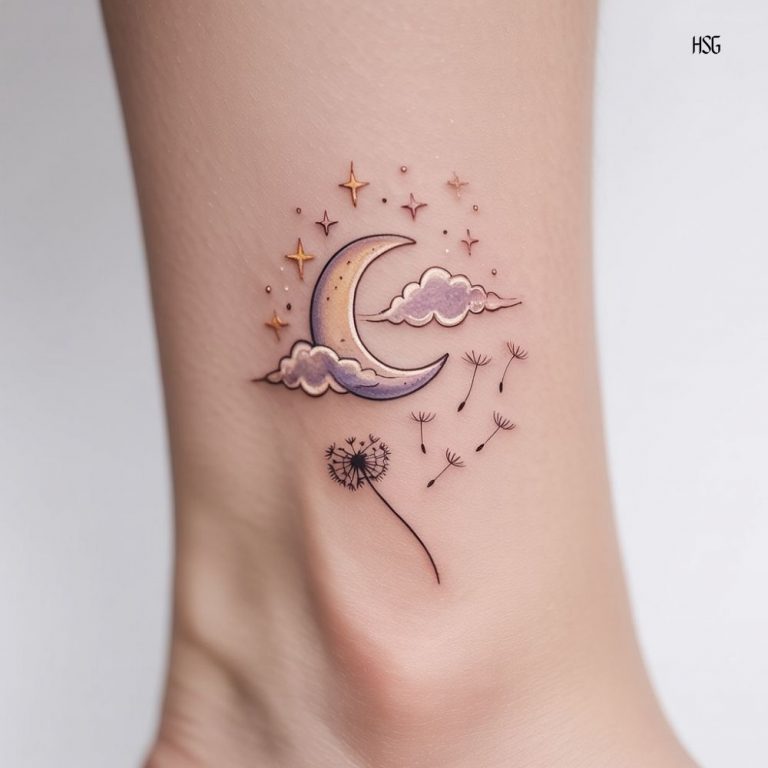
The week I got this tattoo, when everything felt slightly tender and unfinished in a way that wasn’t bad, just exposed.
That week had been about adjustment, not in a dramatic sense, but in the subtle way new things take time to settle into your body and your routine.
The tattoo was still sore enough to notice, still new enough to catch my eye unexpectedly, and I remember cooking carefully then, moving slower than usual, paying attention to small sensations instead of rushing through them.
Standing in my kitchen now, making the same recipe again, I realized how clearly the memory lived in my hands, even before my mind caught up.
Why This Recipe Stayed With Me
This isn’t a flashy dish or something I make to impress people. It’s rich without being heavy, comforting without being bland, and layered in a way that rewards patience instead of precision.
It’s the kind of recipe that feels grounding when you’re adjusting to something new, whether that’s a tattoo, a shift in identity, or just a quiet internal change you don’t have language for yet.
The first time I made it, that week, I remember thinking how right it felt to cook something that required attention but not stress, something that let me be present without asking me to perform competence or creativity. I needed that steadiness more than novelty, even if I didn’t realize it at the time.

The Tattoo and the Kitchen, Existing at the Same Time
When I got the tattoo, I thought the moment would feel bigger, more defining, but instead it folded into my life quietly, becoming part of my everyday movements faster than I expected.
Cooking that week was one of the ways I realized that the tattoo wasn’t a disruption, but an addition, something that would live alongside ordinary moments rather than replacing them.
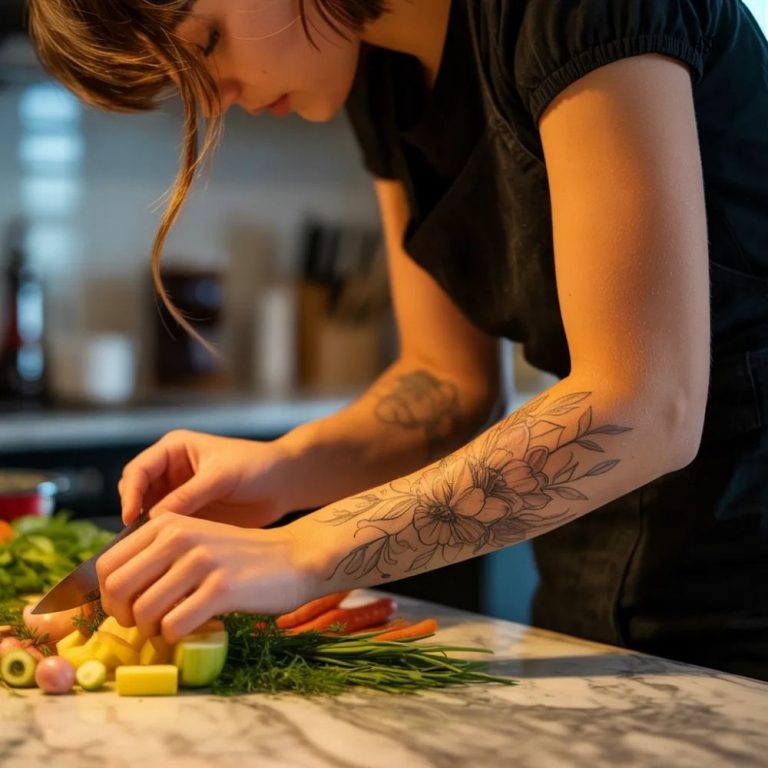
I remember standing at the stove, sleeve pushed up, the skin still slightly sensitive, noticing how natural it felt to move carefully, deliberately, as if my body already knew this was a time for gentleness.
The recipe mirrored that energy, slow, forgiving, impossible to rush without losing something important. That connection stayed with me longer than the initial excitement of the tattoo itself.
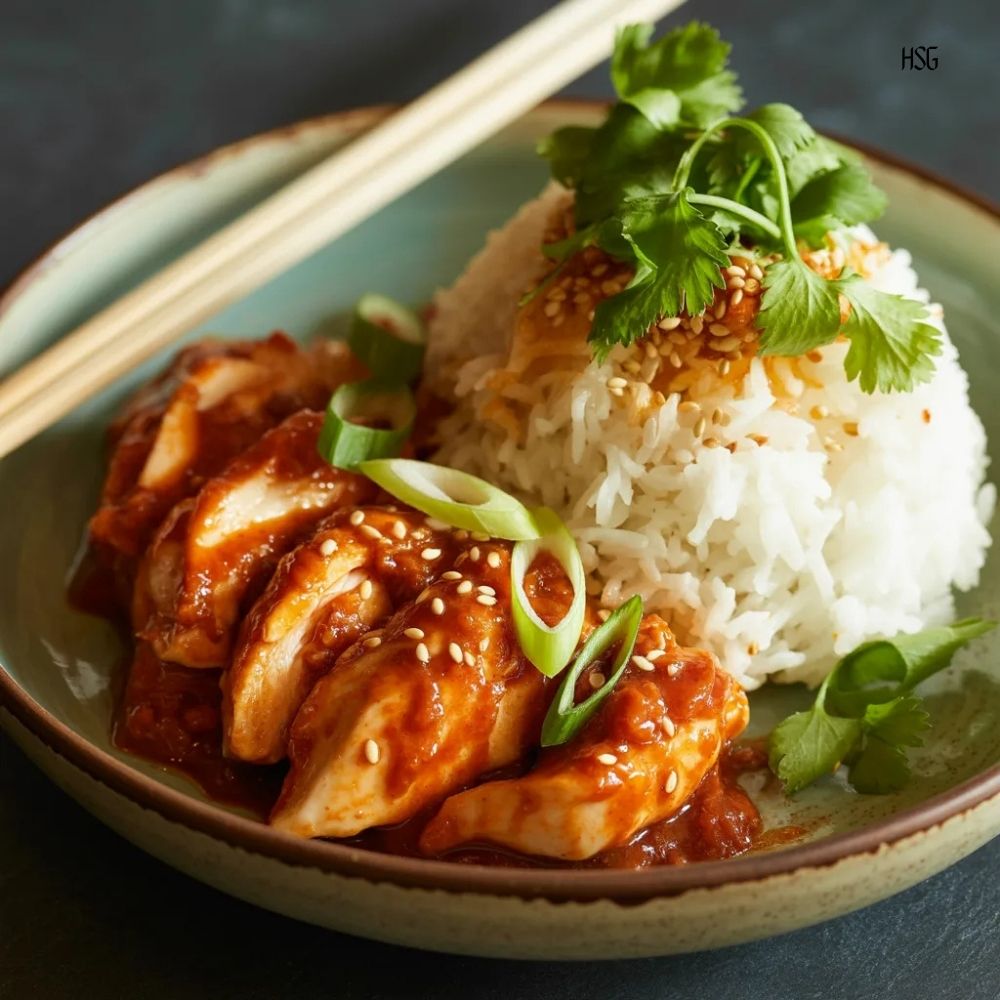
The Recipe: Creamy Gochujang Chicken with Coconut Rice
This is the dish I made then, and the one I made again today, and the one I’ll probably return to whenever I need something familiar that still feels intentional.
Coconut Rice (Start This First)
- 1 cup jasmine rice
- 1 cup full-fat coconut milk
- ½ cup water
- ½ teaspoon salt
Rinse the rice until the water runs mostly clear, then combine it with the coconut milk, water, and salt in a saucepan. Bring it to a gentle boil, reduce the heat to low, cover, and let it cook slowly until the liquid is absorbed and the rice is tender.
Once it’s done, let it rest off the heat for a few minutes before fluffing. The result is subtle, fragrant, and grounding, not sweet, just softly rich. This rice matters more than it seems. It sets the emotional tone of the dish.
Creamy Gochujang Chicken
- 1½ pounds boneless, skinless chicken thighs
- Salt and black pepper
- 1 tablespoon olive oil
- 3 cloves garlic, minced
- 1 tablespoon fresh grated ginger
- 2 tablespoons gochujang
- 1 tablespoon soy sauce
- 1 tablespoon honey
- ¾ cup full-fat coconut milk
- 1 tablespoon rice vinegar
- Optional: a small squeeze of lime
Season the chicken generously with salt and pepper. Heat the olive oil in a wide pan over medium heat and sear the chicken until deeply golden on both sides. Don’t rush this step. The color matters, and so does the patience it takes to get there.
Remove the chicken and lower the heat slightly. Add the garlic and ginger, letting them soften and release their aroma without browning too aggressively. Stir in the gochujang, soy sauce, and honey, letting the paste loosen and bloom in the heat until it smells warm and savory.
Pour in the coconut milk and rice vinegar, stirring slowly until the sauce becomes smooth and cohesive. Return the chicken to the pan, nestling it into the sauce, then cover and let it simmer gently until the chicken is tender and the sauce has thickened.
Taste and adjust, adding a pinch of salt or a squeeze of lime if needed. The flavor should be deep, slightly spicy, faintly sweet, and comforting in a way that lingers.
Why This Dish Feels Like the Tattoo Feels
This recipe doesn’t shout. It doesn’t spike your senses or demand attention. It unfolds gradually, rewarding you for staying present, for letting things simmer instead of forcing them forward.
That’s exactly how the tattoo integrated into my life too, not as a defining moment that overshadowed everything else, but as something that became meaningful through repetition.
Each time I make this dish, it tastes slightly different, depending on how I move, how long I let it simmer, how I feel that day, and yet the core remains the same. The tattoo is like that too. The meaning shifts as I change, but the choice stays solid.
That parallel didn’t feel poetic when I first noticed it. It felt obvious.
Eating It Then vs Eating It Now
When I sat down to eat this dish the first time, that week, I remember feeling quiet, not reflective in a dramatic way, just aware. Eating slowly, noticing texture, heat, comfort. I wasn’t thinking about the future or the significance of anything. I was just there.
Eating it now, months later, I feel steadier. The tenderness is gone. The adjustment has settled. The tattoo feels like part of me, and the recipe feels like something I trust myself to make without fear of getting it wrong.
The difference isn’t in the dish. It’s in me.
What This Taught Me About Memory
Memory doesn’t always live in photos or journals or clear narratives. Sometimes it lives in muscle memory, in timing, in how you season something without measuring because your hands remember what your body needed then.
Cooking this recipe again didn’t bring back the week vividly or emotionally. It didn’t reopen anything. It simply acknowledged that the version of me who needed this dish then still exists, even if she doesn’t need the same kind of support anymore.
That recognition felt grounding rather than nostalgic.
Main Character Moment of the Day
Main Character Moment of the Day: cooking the same recipe I made the week I got this tattoo.
Not because I was trying to recreate a feeling or revisit a moment, but because repetition has a way of carrying meaning forward without making a spectacle of it. The lesson settled quietly, somewhere between stirring the sauce and fluffing the rice. Repetition carries meaning.
Not the kind that traps you in the past, but the kind that reminds you where you’ve been while you keep moving forward. Some things matter not because they happen once, but because you choose them again.
And sometimes, being the main character isn’t about marking milestones with ceremony, but about returning to what once held you, trusting that the body remembers what the heart doesn’t need to explain anymore.