The Recipe I Can Make Without Looking at Anything
ADVERTISEMENT I didn’t realize I could make this recipe without looking at anything until the day I did it, which is usually how self-trust reveals itself in my life, quietly and without ceremony, showing up mid-action instead of during some intentional moment of reflection. ADVERTISEMENT I was already in the kitchen, already moving, already reaching…
I didn’t realize I could make this recipe without looking at anything until the day I did it, which is usually how self-trust reveals itself in my life, quietly and without ceremony, showing up mid-action instead of during some intentional moment of reflection.
I was already in the kitchen, already moving, already reaching for ingredients with the kind of confidence that doesn’t feel like confidence at all, more like familiarity, when I noticed there was no recipe open, no phone propped against the backsplash, no mental checklist running in the background.
My hands were already doing what they needed to do, and my mind was free to wander in a way it rarely is when I’m trying to get something right.
That was the moment it clicked that this recipe wasn’t just something I liked making. It was something I had learned with my body.
How This Recipe Entered My Life Slowly
I didn’t master this dish quickly. I didn’t memorize it intentionally or practice it until it was perfect. I made it once, then again a few weeks later, then again when I didn’t want to think too hard, and eventually it became something I returned to without announcing the decision to myself.
It was the kind of recipe that doesn’t demand precision or performance, which made it easy to repeat, and repetition is where real familiarity lives.
Each time I made it, I learned something small, how much salt felt right instead of how much I was “supposed” to use, how long the pan needed before the heat was right, how the smell shifted when it was ready instead of when the timer said it should be.
None of these lessons felt like learning in the traditional sense. They felt like accumulation.
The Recipe: Miso-Butter Noodles With Garlic
This is the dish I can make without looking at anything, not because it’s flashy or complex, but because it’s forgiving, intuitive, and deeply satisfying in a way that doesn’t depend on novelty.
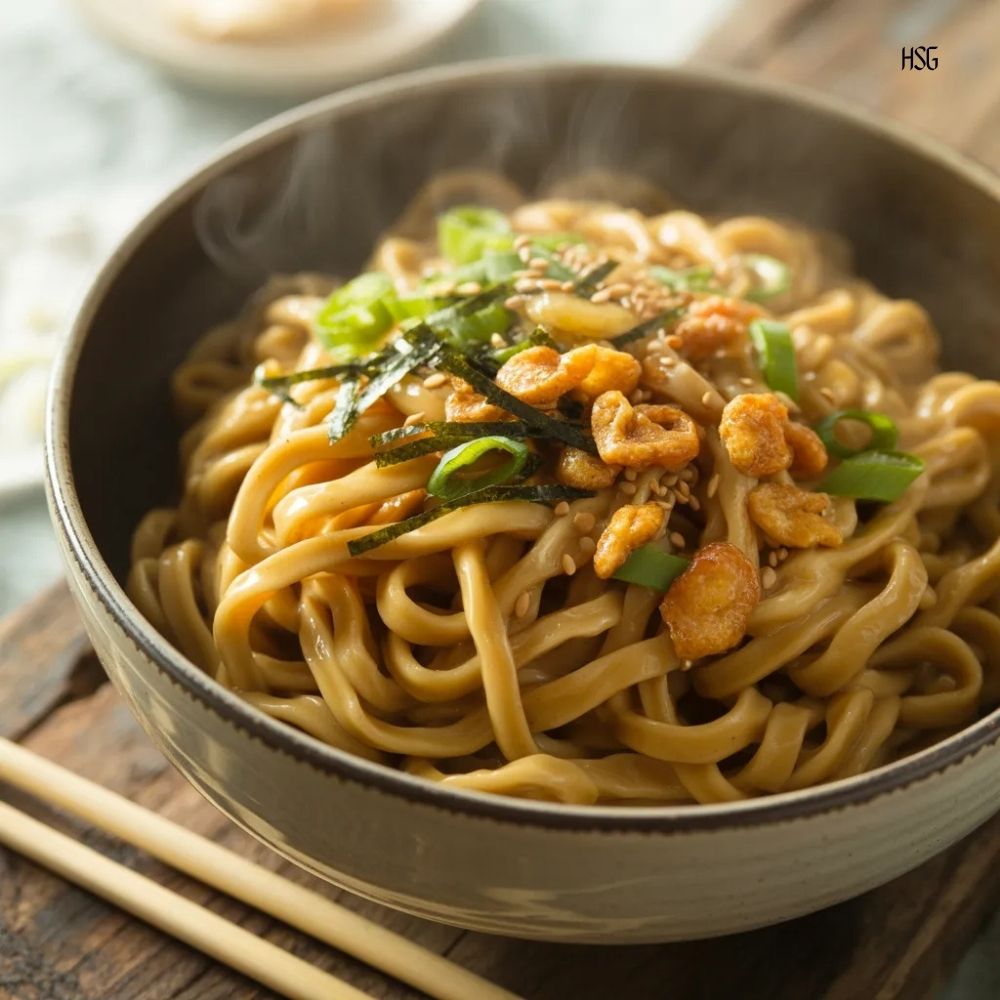
I start by boiling noodles, usually something simple like spaghetti or udon, salted generously, not measured, just enough that the water tastes right. While the water heats, I melt butter in a pan, letting it foam gently without browning too far, then add minced garlic.
Not too much, not too little, just enough that it smells warm and grounding instead of sharp. I keep the heat moderate because this dish doesn’t reward rushing.
Once the garlic softens, I stir in white miso, watching it dissolve into the butter until the sauce turns glossy and cohesive, thick enough to cling but loose enough to move easily. There’s no exact ratio anymore.
I adjust based on how it looks, how it smells, how the day feels. A splash of pasta water loosens everything just enough, and the noodles go straight into the pan, not drained too carefully because that starchy water matters.
I toss everything together until the noodles are coated and the sauce looks settled, then finish with black pepper and sometimes a squeeze of lemon if the dish feels like it needs brightness. That’s it. No garnish required. No flourish. Just something warm, savory, and deeply familiar.
The First Time I Realized I Didn’t Need the Recipe Anymore
The realization didn’t feel triumphant. It didn’t feel like an achievement unlocked. It felt almost anticlimactic, which is how most meaningful growth shows up in real life. I was halfway through cooking before I noticed I hadn’t checked anything, and by the time I did notice, it felt too late to interrupt the flow.
That’s when I realized how different embodied knowledge feels from learned knowledge. I didn’t know the recipe in my head. I knew it in my hands, in my timing, in the way my body adjusted automatically when something needed more heat or more time.
That kind of knowing doesn’t announce itself. It just works.
How This Mirrors the Way I Live Now
As soon as I noticed the pattern in the kitchen, I started seeing it everywhere else. I don’t move through my life with rigid plans or constant reference points the way I used to.
I don’t need instructions for every decision or reassurance at every step. I still think things through, but I trust my internal sense of timing more than I trust external rules.
I used to approach life the way I approached new recipes, carefully, hesitantly, double-checking everything, afraid of getting it wrong. Now, I move through it the way I cook this dish, with awareness, responsiveness, and a willingness to adjust instead of panic.
The confidence isn’t loud. It’s operational.
The Difference Between Mastery and Familiarity
What makes this recipe meaningful to me isn’t that I mastered it. Mastery implies control, perfection, and a finished state. Familiarity is different. Familiarity allows room for variation, for off days, for changes in mood and circumstance. Familiarity means you can show up imperfectly and still succeed.
I don’t make this dish the same way every time. Sometimes it’s richer. Sometimes it’s lighter. Sometimes it leans more savory than usual. And that variability doesn’t feel like failure. It feels like responsiveness.
That’s how I want to live.
The Calm That Comes From Not Needing Proof
Cooking without looking at anything didn’t make me reckless. It made me calm. There was no anxiety about getting it right, no urge to second-guess myself, no internal commentary running alongside the action.
I trusted that I would notice if something needed adjusting, and that trust freed up mental space I didn’t realize I’d been holding hostage.
That calm is what self-trust actually feels like, not bravado or certainty, but the absence of constant checking.
How This Changed My Relationship With Mistakes
When you cook this way, mistakes stop being catastrophic. If something tastes slightly off, you adjust. If it’s too salty, you balance it. If it’s too rich, you add brightness. Nothing is ruined. Everything is workable.
Living this way changed how I approach mistakes outside the kitchen too. I don’t spiral the way I used to. I don’t assume every misstep is a verdict on my judgment. I adjust. I learn. I continue.
That flexibility feels like freedom.
Main Character Moment of the Day
Main Character Moment of the Day: the recipe I can make without looking at anything.
Not because I memorized it or perfected it, but because I learned it through repetition, attention, and willingness to show up imperfectly until it became part of me.
The lesson landed gently and stayed. You don’t need mastery to trust yourself. You need experience, patience, and permission to begin without certainty.
Sometimes being the main character isn’t about doing something extraordinary or new, but about realizing how much you already know, how often your instincts have been right, and how capable you are when you stop interrupting yourself.
And sometimes, self-trust doesn’t arrive as a declaration at all, but as a quiet moment in the kitchen, hands moving confidently, no instructions needed, fully present in the life you already know how to live.