Accepting Imperfection in a Dish and in a Tattoo
I noticed the imperfection before I tasted it, which is always how it happens, because my eye tends to catch what’s slightly off before my body has a chance to decide whether it actually matters. The sauce had split just a little, not dramatically, not ruined, but enough that it wasn’t the smooth, glossy version…
I noticed the imperfection before I tasted it, which is always how it happens, because my eye tends to catch what’s slightly off before my body has a chance to decide whether it actually matters.
The sauce had split just a little, not dramatically, not ruined, but enough that it wasn’t the smooth, glossy version I’d pictured while I was cooking, the one that exists more clearly in your head than it ever does on a real plate.
For a moment, my instinct was to fix it, to reach for the whisk, adjust the heat, add something to force it back into the version I thought it was supposed to be.
That instinct felt familiar in a way that went beyond cooking, because I’ve spent a lot of my life smoothing things over, tightening edges, correcting details before anyone else could notice them.
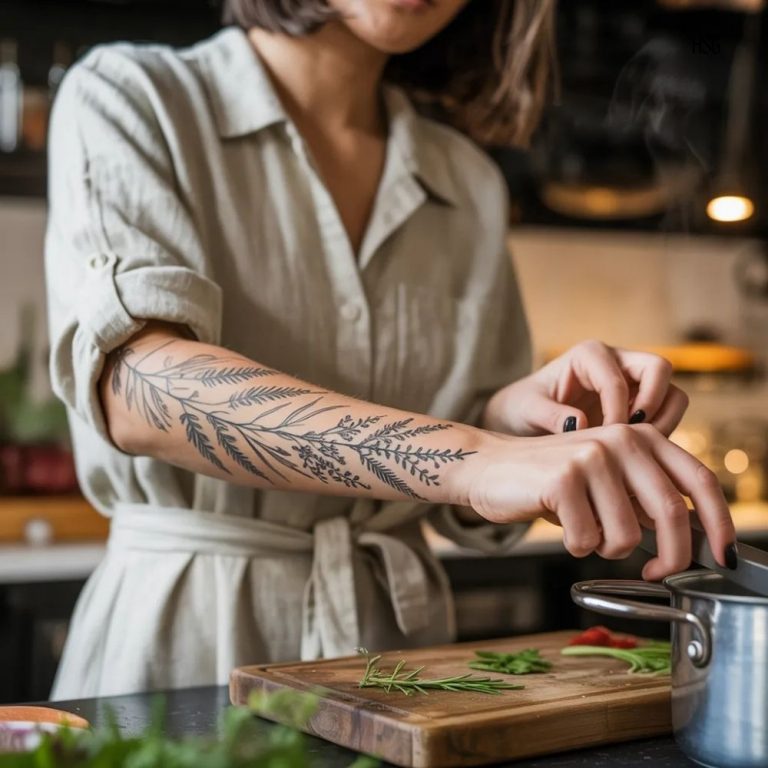
And then I looked down at my arm, at the tattoo I’d stopped consciously thinking about months ago, and I realized how many times I’d stood in this exact place before. Not in the kitchen. But inside myself.
The Dish That Didn’t Cooperate
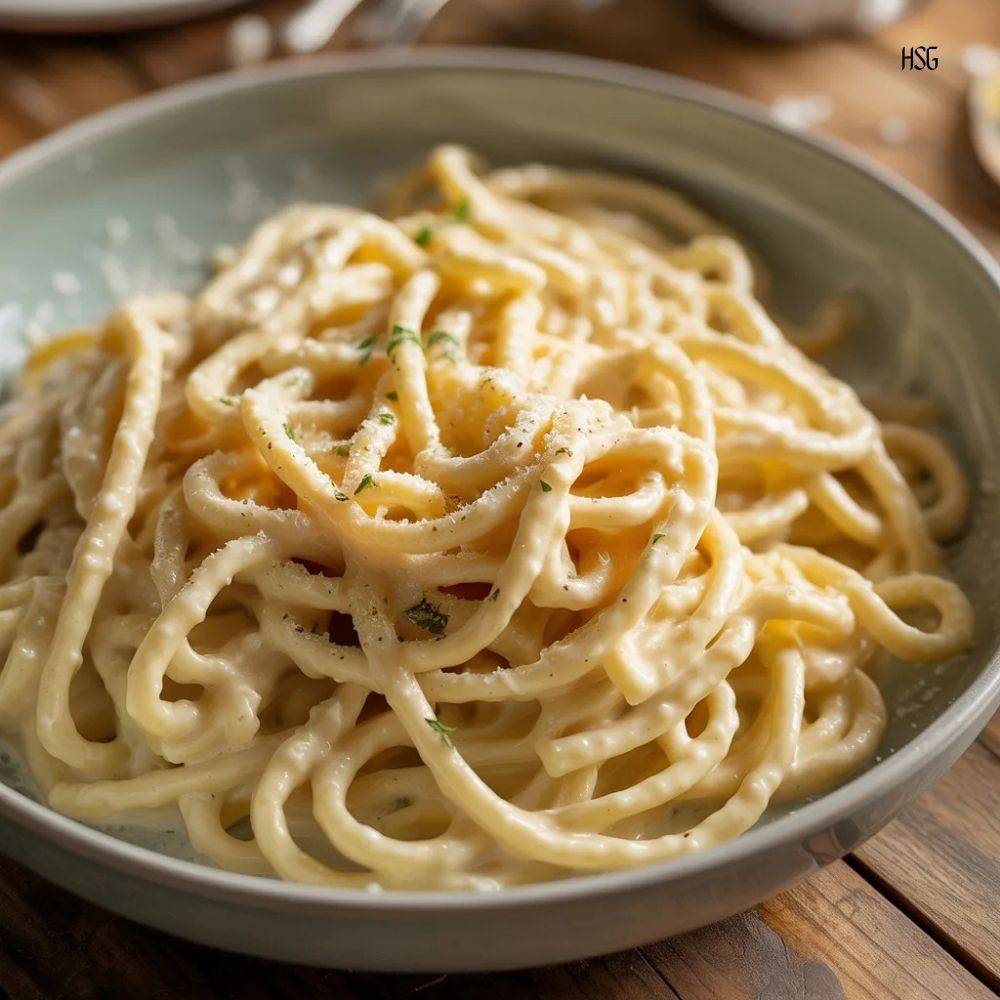
It was a simple dish, one I’ve made enough times to trust myself with it, which is part of why the imperfection caught me off guard. I was making a creamy sauce meant to coat the pasta evenly, something comforting and familiar, something I didn’t expect to challenge me.
I’d added the cream too quickly, or maybe the pan was still a touch too hot, and instead of coming together smoothly, the sauce broke slightly, the fat separating just enough to dull the shine.
It still smelled right. It still tasted good when I dipped a spoon in. But visually, it wasn’t what I’d intended. It looked human. And for a second, that bothered me more than it should have.
The Pause Before Fixing
I stood there longer than necessary, spoon in hand, debating whether to intervene, because I knew I could probably save it if I wanted to, bring it closer to perfect with enough effort. But I also knew that the dish was already edible, already comforting, already going to be enjoyed.
The question wasn’t whether I could fix it. It was whether I needed to.
That pause felt heavier than it should have, because it wasn’t really about the sauce. It was about my relationship with imperfection, about how quickly I move to correct things that don’t quite align with my internal blueprint, even when they don’t actually cause harm.
How This Mirrors the Tattoo More Than I Expected
When I first got my tattoo, I remember noticing the tiny irregularities immediately, the way one line wasn’t quite as sharp as I’d imagined, the way the ink settled slightly differently in one spot compared to another. No one else noticed. I barely mentioned it out loud.
But I noticed.
At first, those details felt louder than the tattoo itself, like flaws interrupting the meaning I’d assigned to it. I wondered briefly if I should have adjusted the placement, changed something small, aimed for a more precise version.
That feeling passed faster than I expected. Over time, those imperfections softened into familiarity, becoming part of what made the tattoo feel lived-in instead of manufactured.
Standing there with the imperfect sauce, that parallel landed quietly but clearly.
The Myth of Precision as the Goal
We’re taught, subtly but persistently, that precision equals quality, that the closer something gets to an idealized version, the more valuable it becomes. That belief shows up everywhere, in work, in relationships, in appearance, and apparently, in cooking.
But the more I live inside my own life, the more I notice how rarely precision is what actually makes something meaningful. Precision can be impressive, but it’s also fragile. It depends on control, on conditions lining up perfectly, on nothing unexpected happening.
Character, on the other hand, survives disruption.
The sauce didn’t break because I didn’t know what I was doing. It broke because I was moving intuitively instead of cautiously, trusting the process instead of micromanaging it. That trust mattered more than the result.
Letting the Dish Be What It Was
I plated it as it was, resisting the urge to hide the imperfection under garnish or distraction. I didn’t rework it. I didn’t correct it. I let it exist in its slightly uneven state.
When I sat down to eat, something surprising happened. I enjoyed it more than usual.
Without the pressure of perfection, I was more present, more attuned to the warmth, the flavor, the comfort of the meal itself instead of the performance of it. The dish felt generous, honest, unpretentious.
It felt like something made by a person, not a recipe.
When Imperfection Becomes Part of the Story
As I ate, I kept thinking about how my favorite tattoos are the ones that feel most human, the ones where the lines aren’t overly polished, where the ink has settled into my skin in a way that reflects movement, aging, and time.
Those tattoos don’t look frozen. They look lived with. The same was true of the dish in front of me.
There was a quiet relief in not fixing the sauce, a release I didn’t know I needed, because it reminded me that not every imperfection is a problem to solve. Some are simply evidence of participation, of engagement, of doing something instead of planning it perfectly.
That relief extended beyond the kitchen.
I realized how often I interrupt myself mid-process, trying to smooth things out before they’ve had a chance to settle naturally, and how much energy that costs me over time.
Letting the dish be imperfect felt like practicing a different way of moving through life.
The Confidence That Comes From Acceptance
Accepting imperfection didn’t make me careless. It made me confident in a quieter way, the kind of confidence that doesn’t need to prove itself through polish or perfection.
I didn’t feel like I’d failed.
I felt like I’d chosen presence over control.
That choice stayed with me long after the meal was finished.
Craft isn’t about eliminating all flaws. It’s about making choices, adjusting when necessary, and knowing when to stop intervening. It’s about understanding the difference between harm and difference.
The dish wasn’t harmed by imperfection. Neither was the tattoo. And neither am I.
Main Character Moment of the Day
Main Character Moment of the Day: accepting imperfection in a dish and in a tattoo.
Not because I stopped caring about quality or intention, but because I realized that character carries more weight than precision ever could. The lesson arrived without drama, as the best ones do. Character beats precision.
Some things don’t need to be corrected to be meaningful. Some things are better when they reflect the hands that made them, the moment they were created in, and the humanity behind them.
And sometimes, being the main character isn’t about getting everything exactly right, but about recognizing when something is already good enough to stand as it is, imperfections included, and letting that be part of the story instead of something to erase.